
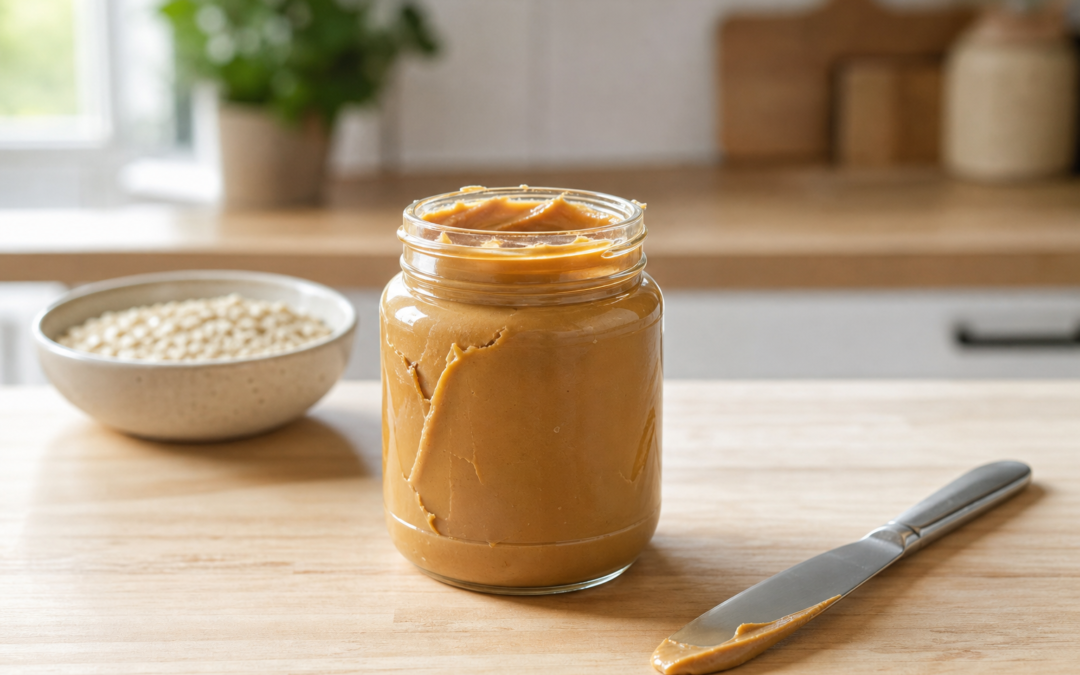
Peanut butter often gets treated as a kid-food extra or an emergency sandwich ingredient. But when grocery costs are tight, it can be one of the most useful proteins in the cart.
It is shelf-stable, widely available, and easy to use in meals that need a little more substance. The key is to think of it as a flexible pantry protein, not just something for toast.
What actually matters
Peanut butter provides plant protein, mostly unsaturated fats, fiber, magnesium, and several B vitamins, including niacin and folate. Peanuts also contain vitamin E and polyphenols, compounds that help protect fats in the body from oxidative stress.
From a brain-health perspective, no single food carries the whole job. Peanut butter is useful because it helps make everyday meals more nutritionally substantial. Protein contributes amino acids used throughout the body, while unsaturated fats are part of an overall eating pattern that supports vascular health. Its mix of fat, protein, and fiber can also make a carbohydrate-based meal, such as toast or oatmeal, more filling and less likely to be just a quick burst of energy.
At the store, look for a peanut butter you will actually use. The ingredient list does not need to be perfect or trendy. Peanut butter made with peanuts and salt is a simple option, but a standard grocery-store version can still be a practical choice. If you are comparing jars, check the unit price rather than the sticker price alone.
Why this can save you money or effort
A jar lasts far longer than many fresh proteins, so it is less likely to become an expensive forgotten item in the back of the refrigerator. It also gives you a reliable option for the days when the planned dinner did not happen.
Use it where you might otherwise add a more expensive handful of nuts, buy a packaged snack, or order lunch because there is “nothing to eat.” It pairs well with ordinary foods: bananas, apples, oats, whole-grain bread, crackers, noodles, and plain yogurt.
It is not meant to replace every protein in your week. Eggs, beans, dairy foods, poultry, fish, tofu, and lentils each bring different nutrients. Peanut butter simply earns a spot because it is affordable, easy to store, and useful in a hurry.
Try this at the store
Buy one jar of peanut butter and one food to pair with it for the week, rather than buying a collection of snack products.
- Pair it with oats for quick breakfasts.
- Pair it with whole-grain bread and fruit for a simple lunch.
- Pair it with apples or bananas for an afternoon snack.
- Stir it into noodles with frozen vegetables and a little soy sauce for a fast dinner.
If you are feeding one or two people, choose the jar size you can finish while it still tastes fresh. Store it in a cool cabinet, and stir natural peanut butter well before refrigerating if you prefer a firmer texture.
The better question
Instead of asking whether peanut butter is the “best” protein, ask: will this affordable pantry food help me build a real meal on a day when cooking feels like too much?