
Protein has become one of those health ideas that sounds almost too obvious to question.
Want to age well? Eat more protein. Want to keep muscle? Eat more protein. Want to stay independent? Definitely eat more protein.
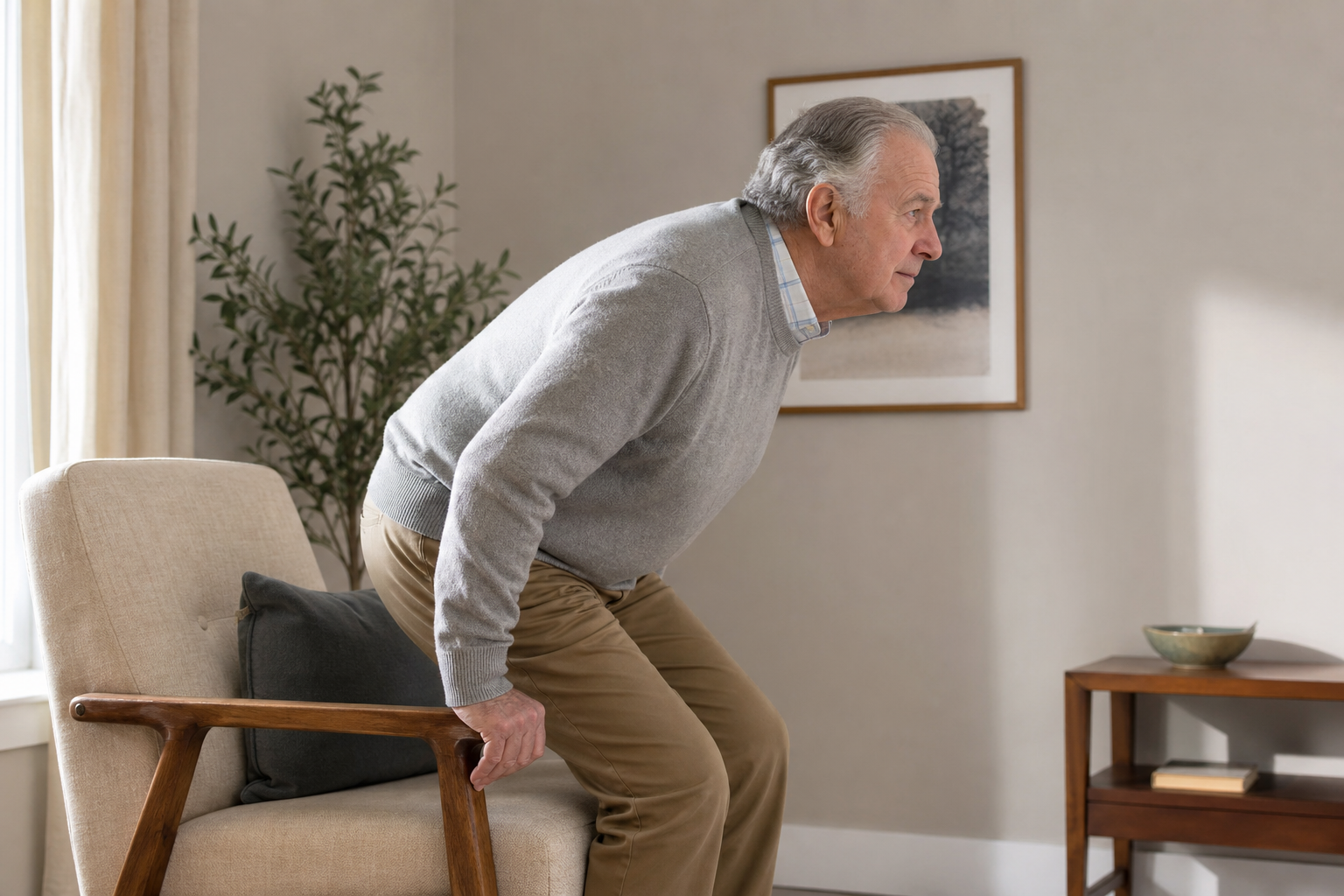
There’s a good reason this message lands. Nobody is particularly interested in preserving a lab value as they get older. They want to carry groceries, get up from a chair without strategizing, climb stairs, travel, work if they want to, and move through a day without their world getting smaller.
So I wondered: when people say more protein helps us age well, what do they mean? Does it keep people stronger in ways that change daily life? Or have we slipped from a plausible biological idea into a much bigger promise?
Protein is not the same thing as function
Protein matters. Muscle is made of protein, and age-related loss of muscle and strength can make ordinary life harder. That part is not controversial.
But “more protein” is a strangely incomplete prescription. More than what? More for whom? More food, or more powder? More alongside strength training, or more while spending most of the day sitting?
The U.S. protein RDA for adults is 0.8 grams per kilogram of body weight per day. That number is often treated as a target, a floor, and a verdict all at once. It isn’t necessarily any of those things. An RDA is intended to meet basic nutritional needs for most healthy people. It does not settle the separate question of what intake best supports strength, recovery from illness, or physical function later in life.
That distinction is where the conversation gets more interesting.
In the long-running Health, Aging, and Body Composition study, adults ages 70 to 79 with lower reported protein intake were more likely to develop trouble walking a quarter mile or climbing ten steps over six years. People eating at least 1.0 gram per kilogram per day had lower risk than those in the lower intake groups. That is a meaningful outcome. Difficulty walking and climbing stairs changes what a person can do in the world. The study is worth reading closely, though, because it was observational. People who eat more protein may also differ in activity, health, income, appetite, illness, or many other ways that are hard to fully untangle.
Association can point us toward a useful question. It cannot tell us that adding a scoop to a morning smoothie will produce the same result.
The powder question
This is where the popular story becomes less tidy.
If extra protein reliably preserved independence, trials of protein supplements should show clear improvements in the things that matter: walking speed, getting out of a chair, climbing stairs, strength, stamina, and the ability to manage daily life.
Sometimes they do. Often they don’t.
A 2024 systematic review and meta-analysis of 30 randomized trials in adults 60 and older found that whey protein supplementation did not significantly improve handgrip strength, walking tests, timed up-and-go performance, or lean body mass overall. When whey was paired with resistance training, there was a modest improvement in lower-body strength.
That result is neither “protein is useless” nor “everyone needs a supplement.” It is a reminder that muscle is not built by dietary math alone. It is used, challenged, injured, rested, and rebuilt in the context of a whole life.
And the starting point matters. A person who is undernourished, losing weight unintentionally, recovering from a hospitalization, or already frail may be asking a very different question from a healthy, active person whose diet already provides ample protein. Lumping all of those people together can make a study result look more universal than it is.
What are we trying to preserve?
We also tend to make muscle mass the headline because it is easy to picture and easy to measure. But more muscle on a scan is not automatically the same as more life.
Can someone rise from the floor? Keep up with a friend on a walk? Carry a grandchild? Return to the kitchen after a hard week rather than becoming confined to one room? Those are not sentimental extras. They are the outcomes that tell us whether a health strategy changed a person’s options.
Even studies that find a relationship between protein intake and later mobility don’t always find the same relationship with every measure. In another analysis from the same Health ABC cohort, higher protein intake was associated with lower risk of later mobility limitation, but associations with changes in gait speed and lean mass differed by sex and race. That analysis is a useful corrective to one-size-fits-all certainty.
Human bodies do not all respond to the same input in the same way. Neither do human lives.
What gets lost in the protein conversation
The fixation on protein can quietly turn aging into a purchase problem: find the right bar, shake, yogurt, cereal, or powder. That framing is convenient. It also risks obscuring what we know matters to physical function.
Strength is not only a nutrition outcome. It is shaped by whether muscles are asked to do demanding things. Mobility is not only a muscle outcome. Pain, balance, vision, medications, joint disease, fear of falling, sleep, social isolation, and the practical structure of someone’s day can all change how much they move and what they can manage.
Protein may be part of the picture. For someone whose intake is low, it may be an especially relevant part. But treating it as the whole picture confuses a necessary ingredient with the finished meal.
There is also a quieter issue here. If we define successful aging as hitting nutrient targets, we can miss the person standing in front of us. Someone may meet every protein goal and still be losing the physical confidence or opportunity to participate in life. Someone else may not have a perfect diet and yet remain remarkably capable because they keep using their body in ways that matter to them.
So perhaps the better question isn’t, “Am I eating enough protein?”
It’s: What, specifically, am I trying to stay able to do, and does this change the odds that I can keep doing it?