
Fresh Isn’t Automatically Better
We’ve been taught to think the produce section is where the “healthy” food lives and the freezer aisle is somehow second best.
That’s not a particularly useful way to shop.
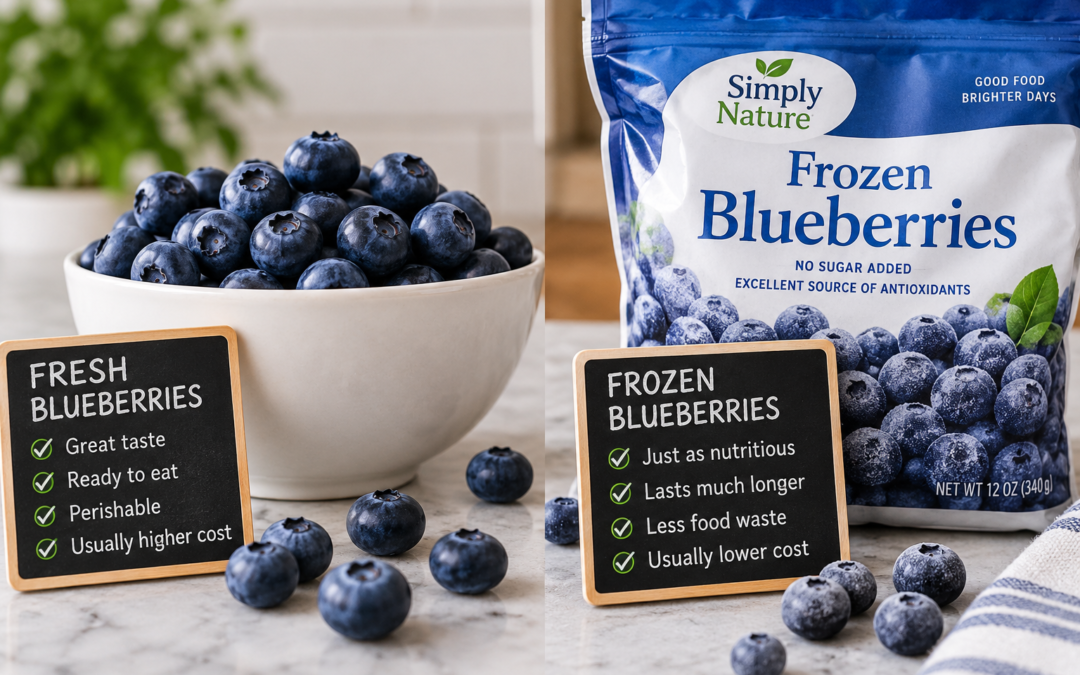
Frozen fruits and vegetables are typically frozen relatively soon after harvest. Fresh produce, meanwhile, may spend days being transported, displayed at the grocery store, driven home, and sitting in your refrigerator before you eat it.
Nutritionally, frozen does not automatically mean inferior.
The bigger issue may be waste.
That $4 container of fresh blueberries isn’t inexpensive if half of it ends up growing fuzz in the back of your refrigerator.
Frozen foods give you a few advantages:
- Use only what you need.
- Keep them for much longer.
- Buy foods even when they’re out of season.
- Skip washing and chopping with many vegetables.
- Always have something available when there’s “nothing to eat.”
What I’d keep in the freezer
Frozen blueberries and other berries. Spinach. Broccoli. Mixed vegetables. Edamame. Peas.
Nothing exotic.
Those few ingredients can become smoothies, bowls, soups, stir-fries, sides, or additions to eggs and pasta without another trip to the grocery store.
A better way to shop
Instead of asking:
“Is fresh better than frozen?”
Ask:
“Which one am I actually going to eat?”
Nutrition that ends up in the garbage isn’t doing much for your brain.