
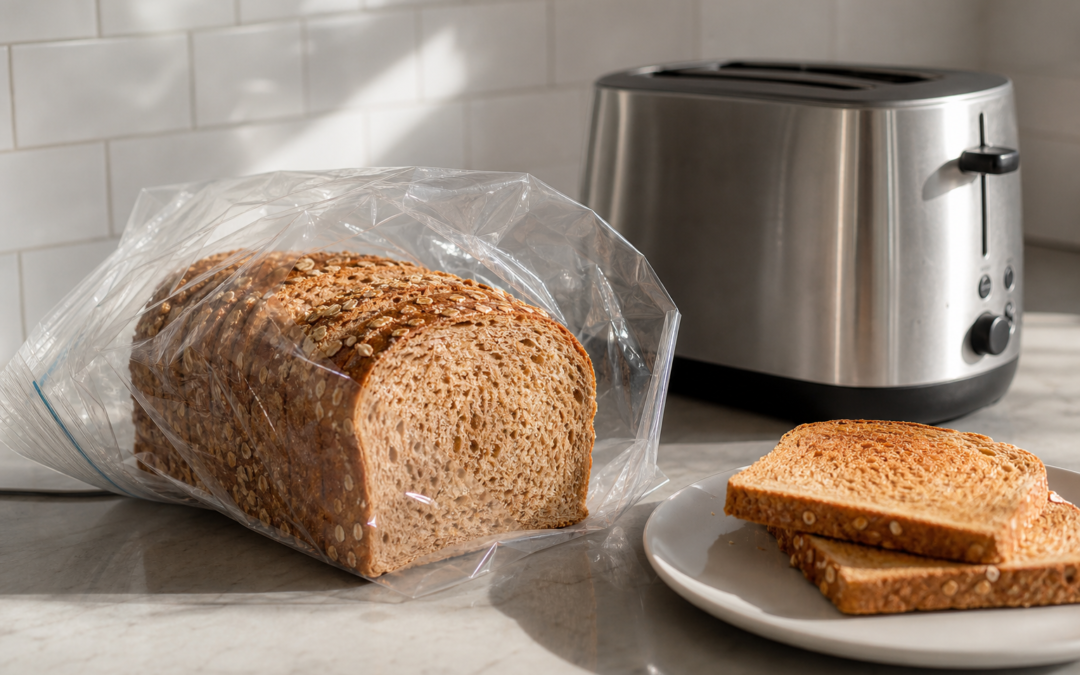
Whole-grain bread is often an affordable breakfast, lunch, or emergency-dinner staple. The problem is that smaller households can lose half a loaf to staleness or mold before they ever get to it.
The useful move is simple: buy a bread you like, freeze it on the day you bring it home, and take out only the slices you need. This is not about making bread last forever. It is about making a practical staple available when you need a meal quickly.
What actually matters
Look beyond front-of-package phrases such as “wheat” or “multigrain.” Check the ingredient list for a whole grain, such as whole wheat, as the first ingredient. Fiber is another useful clue. A bread with roughly 3 grams or more of fiber per slice can be a practical option, though what matters most is choosing one you will actually use.
Whole-grain breads can contribute fiber, magnesium, iron, and several B vitamins. Those nutrients have roles in energy metabolism and overall nutrient adequacy. Fiber also helps make a meal more filling and can support a steadier glucose response, especially when bread is paired with protein and fat rather than eaten alone. Regularly choosing whole grains in place of more refined options is also one practical way to support a dietary pattern that is favorable for vascular health, which matters for brain health over time.
Bread does not need to carry the whole meal. Think of it as the base for eggs, canned salmon, hummus, leftover chicken, peanut butter, or beans. That pairing adds protein and, depending on the topping, nutrients such as choline, omega-3 fats, zinc, or folate.
Why this can save you money or effort
A larger loaf often costs less per slice than a smaller one, but it is only a bargain if it gets used. Freezing prevents the familiar cycle of buying bread with good intentions, finding it moldy a week later, and replacing it.
Sliced bread freezes especially well because there is no thawing project. Put one or two slices directly into the toaster, or let them sit on the counter while you make coffee or pack lunch. This makes a fast meal more likely on busy days, without needing a separate trip for fresh bread.
Try this at the store
- Choose one whole-grain loaf your household genuinely enjoys.
- Check that a whole grain is listed first, then compare fiber and unit price among similar loaves.
- When you get home, keep a few slices out if you will use them in the next couple of days.
- Freeze the rest immediately in the original bag, pressing out excess air first.
- Keep two easy toppings on hand, such as eggs and peanut butter, or hummus and canned fish.
The better question
Will this loaf still be useful to me two weeks from now if I freeze it today?