
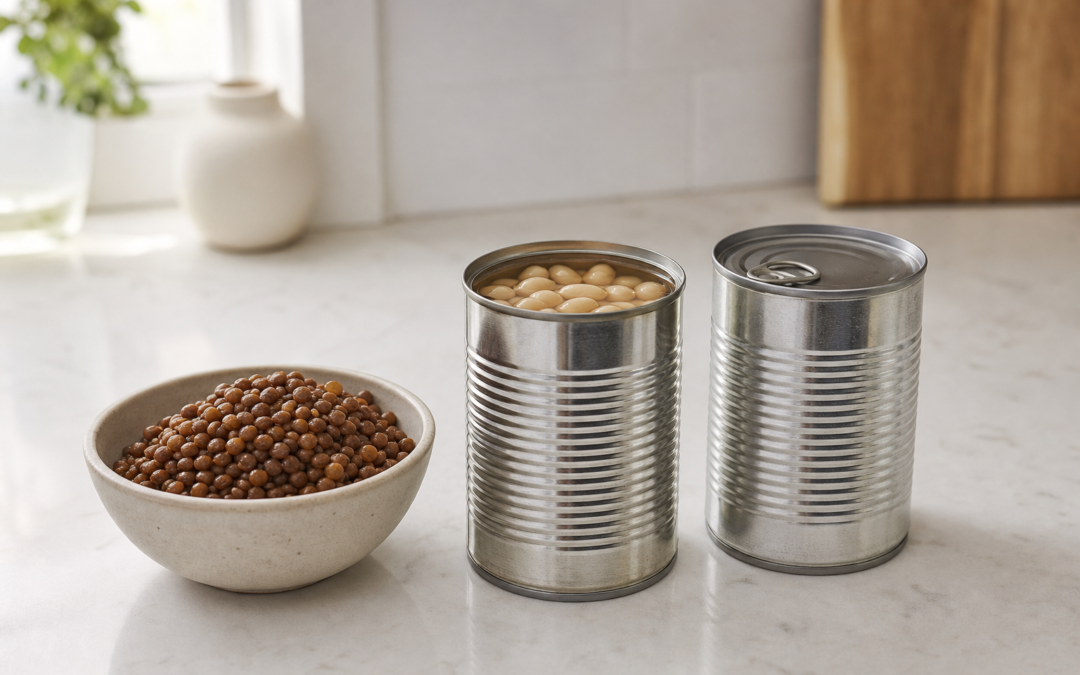
Dry beans are often treated as the automatically smarter buy because they cost less per pound. But a bag of beans that sits in the cupboard for six months is not a bargain. The better choice depends on whether you need dinner help this week or are planning ahead.
Both canned and dry beans can be inexpensive building blocks for meals. The useful shopping decision is simple: buy canned beans for immediate meals and dry beans when you have a specific batch-cooking plan.
What actually matters
Beans are worth keeping in the rotation because they provide fiber, plant protein, folate, magnesium, iron, and potassium. Fiber helps support steadier glucose handling after meals, while folate and other B vitamins are involved in normal energy metabolism. Magnesium and iron also contribute to overall nutrient adequacy.
That combination makes beans a practical fit for a brain-health-oriented eating pattern, especially when they replace a meal built mostly around refined starch. They also pair easily with foods that add other useful nutrients, such as canned fish, eggs, whole grains, vegetables, or yogurt-based sauces.
Canned and dry beans have much the same basic nutritional role. Dry beans generally cost less per cooked serving. Canned beans cost more, but they remove soaking and cooking time, which can be the difference between making a bean-based meal and ordering something else.
If sodium is a concern for your overall eating pattern, look for lower-sodium cans when the price is reasonable. Regular canned beans are still useful. Draining and rinsing them can reduce some of the sodium from the canning liquid.
Why this can save you money or effort
Canned beans are one of the most reliable low-effort dinner shortcuts. A can of chickpeas can become a sheet-pan meal, black beans can fill tacos or quesadillas, and white beans can make pasta, soup, or toast more substantial in a few minutes.
Dry beans make more sense when you are cooking a larger quantity for several meals. Make a pot of lentils for grain bowls and soup, or cook black beans for tacos now and freeze portions for later. Lentils are especially practical because many varieties cook without soaking.
The cost-saving move is not choosing one format forever. It is matching the package to your available time. Convenience can reduce food waste when it helps you use ingredients before takeout, boredom, or an overfull refrigerator takes over.
Try this at the store
Buy two cans of beans you enjoy for quick meals and one bag of dry lentils or beans only if you can name when you will cook them.
- Choose canned black beans for tacos, rice bowls, or scrambled eggs.
- Choose canned chickpeas for salads, soups, or roasting on a sheet pan.
- Choose canned white beans for pasta, tomato soup, or toast with vegetables.
- Choose dry lentils for a faster batch-cooking option, since they cook relatively quickly.
Keep the canned beans where you can see them, then use one on a busy night. Once opened, transfer leftovers to a covered container and use them within a few days, or freeze them in meal-size portions.
The better question
Which version of this food am I most likely to cook and eat this week?