
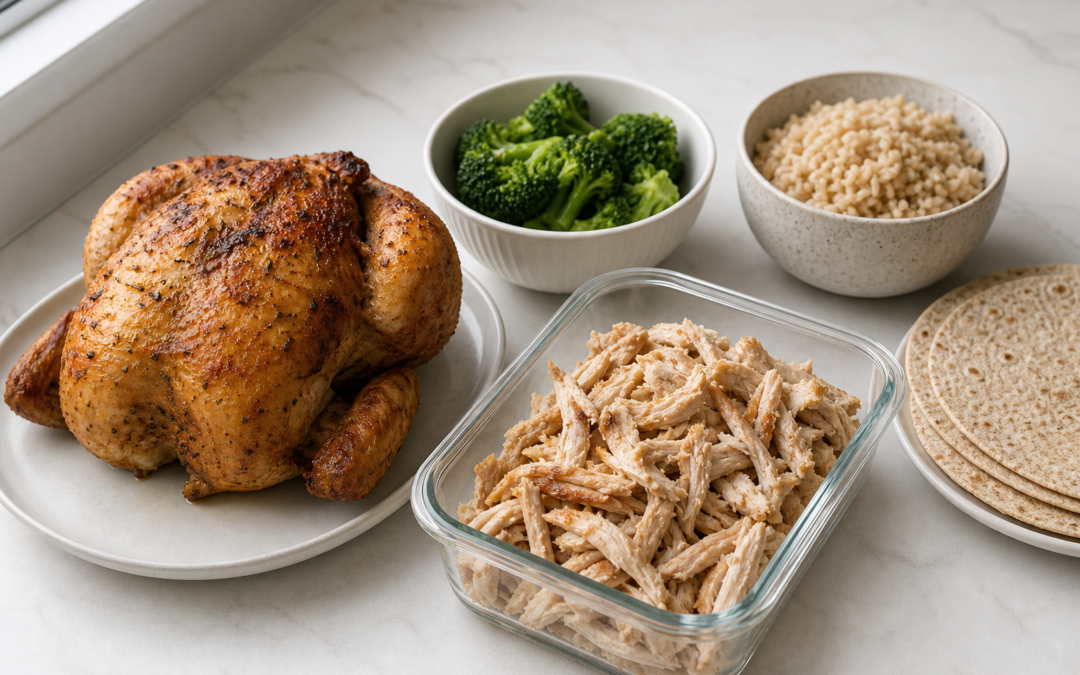
Rotisserie chicken can seem like an unnecessary convenience purchase when raw chicken is often cheaper per pound. But the cheapest food is not always the best value if it sits in the fridge while dinner turns into takeout.
For a busy week, one ready-to-eat chicken can be a useful bridge between having ingredients and actually eating them. The key is buying it with two or three specific uses in mind.
What actually matters
A rotisserie chicken is a practical source of complete protein, meaning it provides the essential amino acids the body uses to maintain tissues and make many compounds involved in normal body function. Chicken also provides several B vitamins, including vitamin B6 and B12, plus minerals such as zinc and iron in varying amounts.
Those nutrients are relevant to a brain-health-oriented eating pattern because adequate protein and micronutrients support overall nutrient adequacy and energy metabolism. Dark meat tends to provide a little more iron and zinc than breast meat, while breast meat is leaner. There is no need to choose only one. Using the whole bird adds variety and helps get the value from what you buy.
The tradeoff is sodium. Rotisserie chickens are often seasoned or brined, so check the nutrition label if one is available and compare options when you can. This is especially useful if other parts of your week include deli meat, canned soup, frozen pizza, or other salty convenience foods. The goal is not to avoid rotisserie chicken. It is to let it be one convenient protein among a varied grocery cart that also includes beans, eggs, fish, whole grains, fruits, and vegetables.
Why this can save you money or effort
The real value is the labor you are not doing: thawing, seasoning, cooking, and cleaning a pan. That can make it easier to build meals around foods that often get neglected when time is short, such as frozen vegetables, bagged slaw, canned beans, and brown rice or whole-grain pasta.
Portion the chicken soon after you get home. Use some that night, refrigerate enough for the next couple of days, and freeze the rest in meal-size containers. This prevents the familiar end-of-week container of chicken that nobody wants to investigate.
- Use sliced chicken in a whole-grain wrap with hummus and crunchy vegetables.
- Stir shredded chicken into canned beans, salsa, and frozen corn for quick bowls.
- Add it to vegetable soup with a handful of barley or whole-grain noodles.
- Save the bones for stock if that is useful to you, but do not treat it as another kitchen assignment.
Try this at the store
Before putting a rotisserie chicken in your cart, name three uses: tonight’s dinner, one lunch, and one freezer meal. Then buy the supporting ingredients for those meals.
For example, buy one chicken, a bag of frozen broccoli, a microwaveable brown rice pouch, canned white beans, a bagged slaw mix, and whole-grain tortillas. Dinner can be chicken, broccoli, and rice. Lunch can be chicken-and-bean soup or a wrap. Freeze the remaining shredded chicken for a future quesadilla, soup, or grain bowl.
If you are shopping for one, pull off and freeze half the meat right away. If you are feeding a family, use the chicken as a component rather than expecting it to be the entire meal. Beans, grains, and vegetables stretch it further and add fiber, plant compounds, and more nutritional variety.
The better question
Instead of asking, “Is rotisserie chicken more expensive than raw chicken?” ask, “Will this help me turn the groceries I buy into three meals I will realistically eat?”