
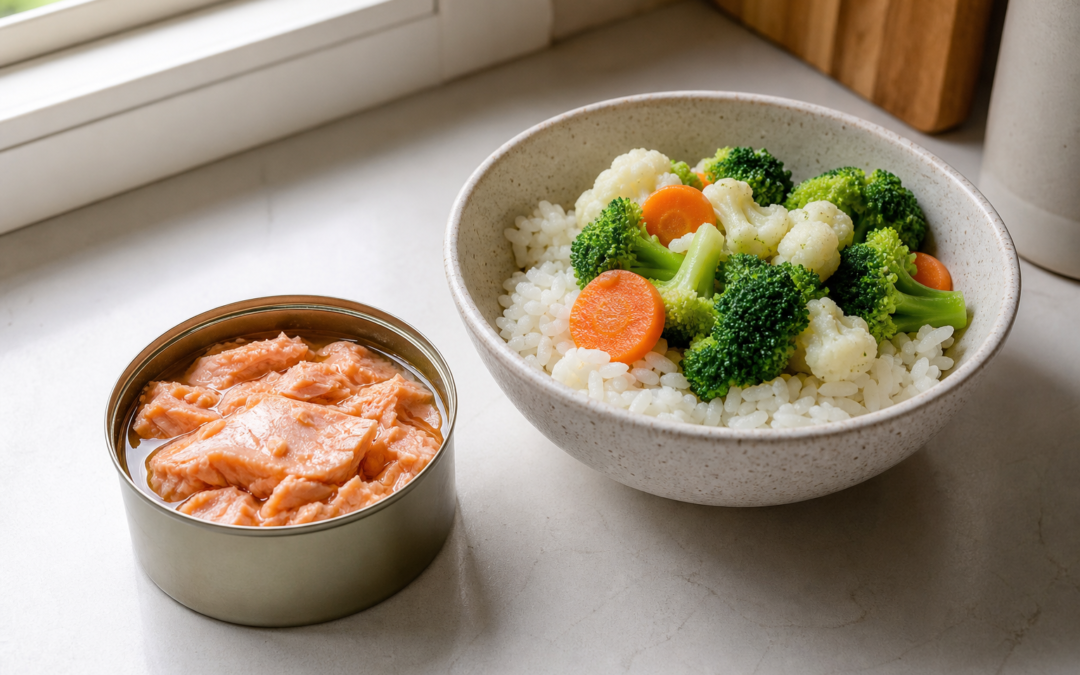
Canned fish often gets bought with vague good intentions, then sits behind the pasta sauce until its expiration date becomes alarming. A better approach is to treat it like a real weeknight protein, with one or two meals already assigned to each can.
This is not about forcing yourself to eat sardines every day. It is about keeping a shelf-stable option that can turn toast, rice, pasta, potatoes, or a bagged salad into a meal when fresh food has run out.
What actually matters
Different canned fish bring slightly different strengths. Salmon and sardines are notable sources of omega-3 fats, which are structural components of cell membranes and fit well in a brain-health-oriented eating pattern. They also provide protein, which supplies amino acids used throughout the body, including in normal brain signaling.
Sardines and canned salmon with bones can contribute calcium, and many canned fish options provide vitamin B12, selenium, and vitamin D in varying amounts. Canned light tuna is often a familiar, affordable choice with substantial protein, though it generally contains less omega-3 fat than salmon or sardines.
The practical move is variety. Keep one kind you already enjoy and one kind that expands your options. If mercury exposure is a concern for you, vary seafood choices and use current public-health guidance to help choose fish and serving frequency.
Why this can save you money or effort
Canned fish has a long shelf life, so there is far less pressure to cook it before it spoils. It also skips the expensive part of many weeknight meals: deciding what protein to thaw, season, and cook when you are tired.
A can of fish can stretch across several inexpensive ingredients. Mix salmon with canned white beans, lemon, and olive oil. Fold tuna into whole-wheat pasta with frozen peas. Put sardines on toast with sliced tomato or roasted peppers. These pairings add fiber from beans, whole grains, and vegetables, which supports steadier digestion and helps make a simple meal more filling.
Look for cans packed in water or olive oil based on how you plan to use them, not because one is automatically superior. Water-packed fish is easy to mix into creamy or oil-based dishes. Olive-oil-packed fish can add flavor and richness to a simple grain bowl or toast.
Try this at the store
Buy three cans, but give each one a job before it goes in your cart:
- One salmon: for rice bowls with frozen vegetables and a sauce you like.
- One canned light tuna: for pasta, a sandwich, or a bean-and-tuna salad.
- One sardines: for toast, crackers, or a quick tomato pasta, if you enjoy them.
Choose pull-tab cans if opening cans is a real barrier on busy days. Check sodium if you are comparing similar products, but do not let a small difference keep you from buying the option you will actually use. Rinsing water-packed fish can reduce some surface sodium when that is helpful for your preferences.
The better question
Instead of asking, “Should I buy canned fish?” ask, “What easy meal will this can make possible before my next grocery trip?”