
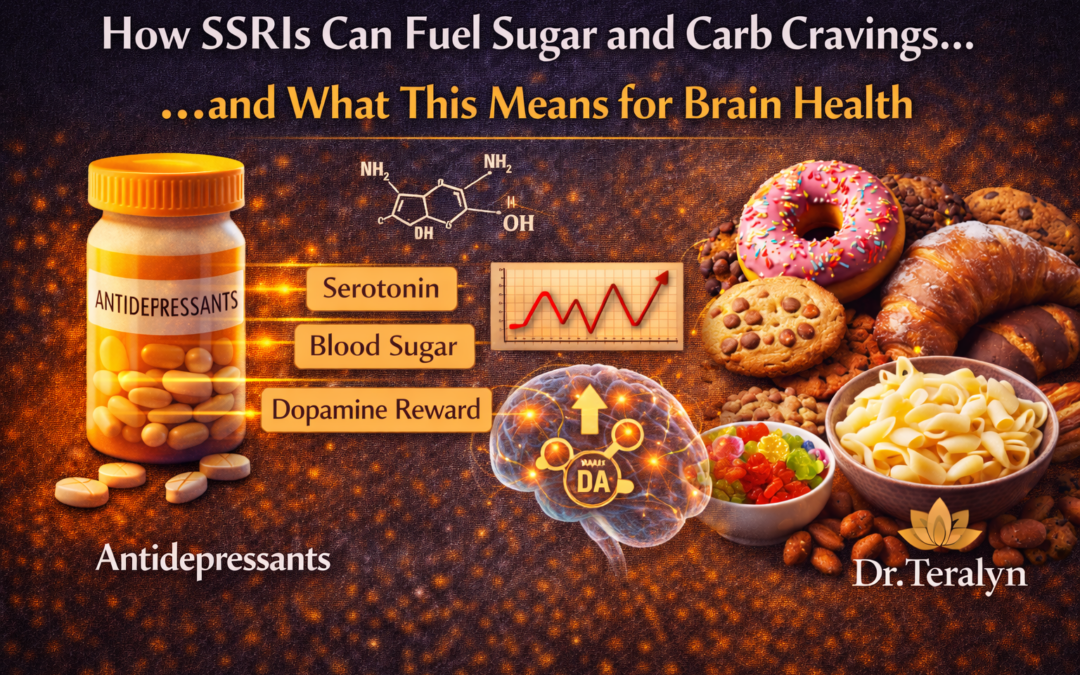
Many people notice something strange after starting an SSRI. They crave sugar. Bread, pasta, sweets, and snacks suddenly feel harder to resist. Hunger feels different. Cravings feel urgent. This is often blamed on “emotional eating” or lack of discipline, but that explanation misses what is actually happening in the brain.
SSRIs change brain chemistry. While they are described as serotonin medications, serotonin does not just affect mood. It also affects appetite, satiety, blood sugar regulation, and reward signaling. When serotonin pathways are altered, the brain may seek quick energy sources. Sugar and refined carbohydrates provide fast fuel. The brain learns this quickly.
SSRIs can also affect insulin sensitivity and metabolism. Some people experience blood sugar swings after starting these medications. When blood sugar drops quickly, the brain sends a strong signal to eat. Cravings are not random. They are a response to unstable fuel. The body is trying to protect itself.
Another factor is dopamine. Dopamine plays a role in motivation and reward. SSRIs can indirectly blunt dopamine signaling in some people. When dopamine signaling feels lower, the brain looks for easy rewards. Sugar and refined carbs temporarily increase dopamine. This does not mean someone is addicted to food. It means their reward system is under strain.
Mitochondria matter here too. SSRIs can affect mitochondrial function, which reduces energy production in the brain. When brain energy is low, cravings increase. The brain wants fast fuel. This is not a character flaw. It is biology.
This helps explain why people often gain weight on SSRIs even when they are “eating the same.” Appetite signals change. Satiety cues weaken. Cravings increase. Over time, people may feel frustrated, ashamed, or confused. Diet culture often steps in and tells them to restrict. That usually makes things worse.
Restricting food while on SSRIs can increase stress hormones and worsen blood sugar instability. This leads to stronger cravings, not fewer. The brain interprets restriction as threat. Threat increases the drive for quick energy. The cycle tightens.
This also matters during deprescribing. When someone tapers an SSRI, cravings can temporarily increase as the brain adjusts. Serotonin systems recalibrate. Stress hormones fluctuate. Energy demand rises. If someone tries to diet during this time, symptoms often intensify. Anxiety, irritability, and insomnia may worsen—not because of relapse, but because the brain is under-fueled.
The solution is not more willpower. It is better support.
Whole foods help stabilize blood sugar. Protein helps reduce cravings by supporting steady energy. Healthy fats help the brain feel satisfied and safe. Regular meals reduce the urgency signals that drive sugar seeking. When the brain trusts that fuel is coming, cravings soften.
This does not mean sugar is “bad” or forbidden. Fear around food increases stress. Stress increases cravings. The goal is nourishment, not control.
SSRIs do not create cravings because someone is weak. They shift brain chemistry, energy use, and reward signaling. When this is understood, people stop blaming themselves and start making better decisions.
Cravings are information. When SSRIs change the brain’s fuel needs, the answer is not restriction. The answer is support.
Medically reviewed by Dr. Teralyn Sell, PhD