
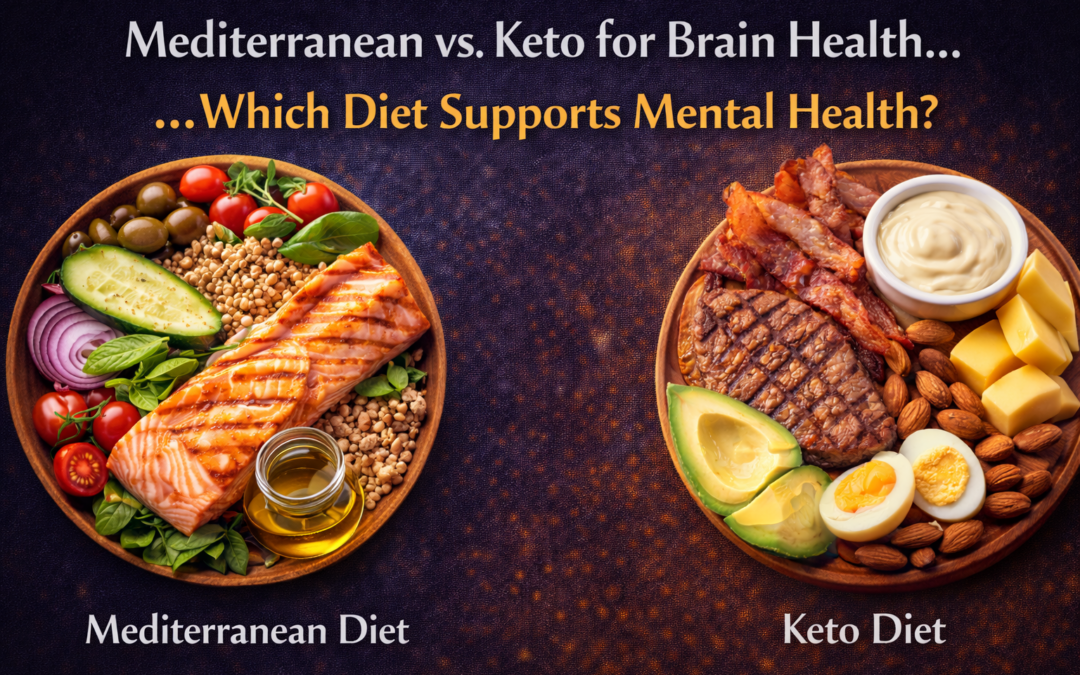
When people start thinking about brain health or mental health, diet often comes up. Two of the most talked-about diets are the Mediterranean diet and the ketogenic (keto) diet. Both are often described as “good for the brain,” but they work in very different ways. Understanding those differences matters, especially for people dealing with anxiety, depression, fatigue, brain fog, or psychiatric medication tapering.
The Mediterranean diet is based on how people traditionally eat in parts of Greece, Italy, and Spain. It focuses on whole foods like vegetables, fruits, olive oil, fish, beans, nuts, whole grains, and moderate amounts of protein. Sugar and highly processed foods are limited. This diet supports steady energy, reduces inflammation, and provides the brain with vitamins, minerals, and healthy fats it needs to function well.
The ketogenic diet works very differently. Keto is very low in carbohydrates and high in fat. When carbs are kept very low, the body switches from using glucose (sugar) for energy to using ketones, which are made from fat. Ketones can be a strong fuel source for the brain. This is why keto has been used for epilepsy and is sometimes explored for severe mood instability or neurological conditions.
Both diets can support brain health, but they are not interchangeable.
The Mediterranean diet supports brain health by being gentle and steady. Blood sugar stays more stable. Inflammation tends to decrease. The gut microbiome often improves. This can help mood, focus, and stress tolerance over time. For many people, this way of eating is sustainable long term and fits well with everyday life. It is often a good foundation for people with anxiety, depression, or those slowly tapering psychiatric medications who need stability more than intensity.
Keto, on the other hand, is more powerful but more demanding. For some people, ketones improve mental clarity, reduce brain fog, and stabilize mood. For others, keto can increase stress, worsen sleep, raise cortisol, or feel overwhelming. The brain may like ketones, but the rest of the body still has to adapt. This adaptation period can be difficult, especially for people already under stress or withdrawing from medications.
This is where context matters. A person with unstable blood sugar, insulin resistance, or severe neurological symptoms may benefit from a ketogenic approach under guidance. A person with chronic stress, adrenal strain, sleep problems, or a sensitive nervous system may do better with the Mediterranean diet. There is no single “best” diet for everyone.
Diet choice also matters during deprescribing. Coming off psychiatric medication places extra demand on the brain. The brain needs fuel, nutrients, and predictability. Sudden or extreme dietary changes can add stress at the wrong time. For many people, the Mediterranean diet provides enough structure without pushing the body into survival mode. Keto may be helpful later, or in specific cases, but it is not automatically the best choice during tapering.
Another difference is flexibility. The Mediterranean diet allows more variety and social ease. Keto is stricter and can be harder to maintain. If a diet increases anxiety, isolation, or rigidity, it may undermine mental health even if it looks good on paper.
The most important takeaway is this: diet is a tool, not a cure. Both Mediterranean and keto approaches can support brain health, but only when matched to the person, their biology, their stress level, and their goals. The brain needs energy, but it also needs safety and stability.
Mental health improves when the brain is supported, not pushed. The best diet is the one that feeds the brain without draining the system.
Medically reviewed by Dr. Teralyn Sell, PhD